Gamification and reverse gamification
Gamification brings the logic of the game into the lesson. Reverse gamification goes the other way: it starts from the game and arrives at schoolwork, reasoning and ethics.


International WESCO program
The game is the means. The end is learning, citizenship and the student's future.
01
Competition is one tool among several, not the goal. The commitment is to the school: the curriculum, the student staying in class and the skills the 21st-century job market asks for.
Gamification brings the logic of the game into the lesson. Reverse gamification goes the other way: it starts from the game and arrives at schoolwork, reasoning and ethics.
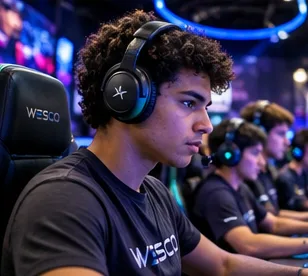
Guided practice of digital sports in several franchises, modes and platforms, suited to each age group, as a tool for development, inclusion, career and leisure.
Students discover the jobs that make Esports exist, and the software, equipment and platforms behind each one.
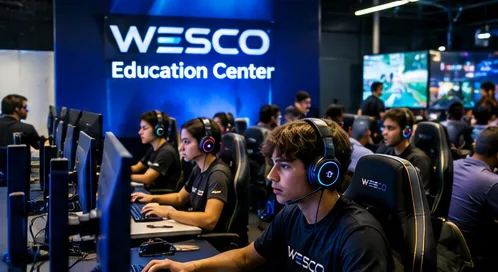
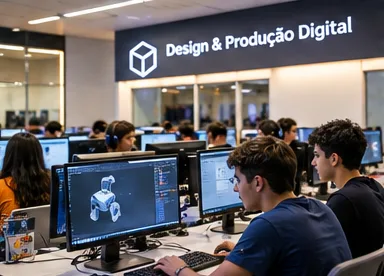
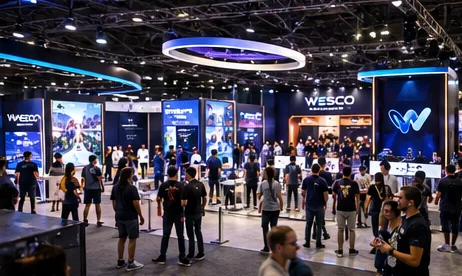
The program lives in a room set up for it: game stations, a streaming corner, VR, robotics and subjects taught through games.
02
Three tracks, adjusted to the age group and to the curriculum of each school system.
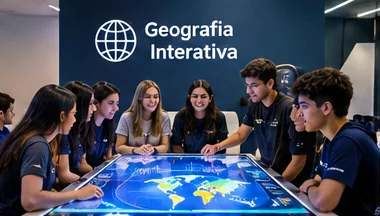
Geography you can touch. History you can walk through.
03
Multidisciplinary teaching through the Esports ecosystem and its subjects.
Esports tools as solutions on several fronts.
Including everyone, without distinction, through the Esports ecosystem.
Valuing the student and the athlete through their whole cycle.
04
The Centre for Education, Innovation and Social Inclusion with Electronic Sport sits inside the school, in the timetable of the school system. Classes run in the morning and afternoon, in groups of up to 40 students in rotation, for two hours at most. Lessons can be taught by staff or by the system's own teachers, trained by the program in the areas where they show aptitude.
Gaming PCs with monitor, keyboard, mouse, headset and chair; consoles with their own screens; phones for mobile gaming; footrests and bean bags.
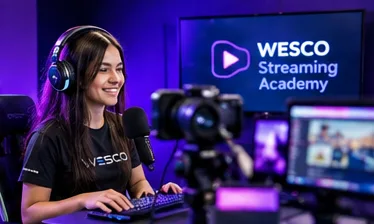
PC and broadcast cameras, microphones, chroma key screen, lighting spots and a central presentation monitor.
Managed wired network at 10/100/1000, managed Wi-Fi on 2.4 and 5 GHz, a network server and uninterruptible power supplies.
Air conditioning sized by the room's thermal calculation, fire extinguishers as the fire service requires, a first-aid kit and themed decoration.
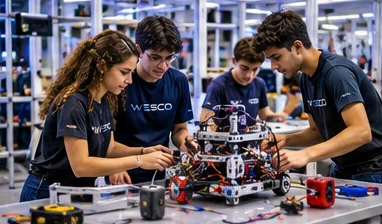
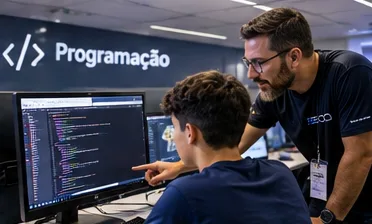
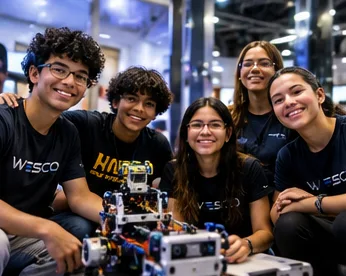
Robotics, programming and gamified mathematics sit next to the games themselves, so the students learn by making.
05
A flexible method, adapted to each school system after a survey of the school's reality.
Student profile and interests, dropout and repetition rates, indicators such as the national school index, infrastructure, working conditions and how the school teams are organised.
Continued training of managers and teachers, talks across the school year and multidisciplinary monitoring that guides teaching decisions.
Management, technical and teaching teams joined with the partner network, with administrative support for reporting under the law and the approved work plan.
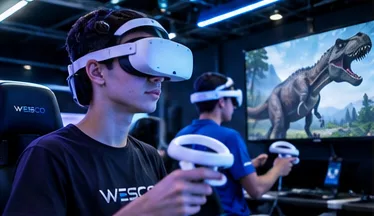
Virtual reality, in class.
06
Beyond the school: spaces for first contact, training and professional skills, open to the community, with approved equipment.
In Esports, the first selection does not happen in the match. It happens before it. To play football you need a ball. To practise Esports in a condition to compete you need a suitable machine, a stable connection, a place to train and someone to guide you. Each one is a barrier, and together they decide who reaches the sport before anyone looks at merit.
Approved shared stations
Managed wired and Wi-Fi network
Classes in Esports education and ethics
A bridge to teams, athletes and sanctioned competitions
Including is levelling the ground, not lowering the bar. A centre is not a smaller version of the sport for people with less. It is the same equipment, the same software and the same training standard, within reach of those who never had it.
Visits, demonstrations and first contact, open to the community, for people who never touched Esports.
Guidance, ethics and professional training, so interest in the game turns into knowledge and a work perspective.
For those who choose to compete, the centre is also a training base and a stage for events inside the federated system.
A centre is a partnership, not a building. The equipment and software are approved and standardised by WESCO, so an athlete who started in a centre on the edge of a city trains and competes in the same conditions as in any other centre.
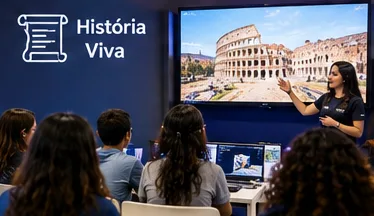
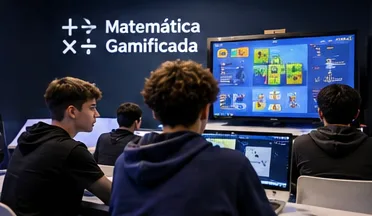
History in front of the Colosseum, mathematics as a game and cities built on screen: the classroom borrows the language of games to teach the school subjects.
The Master in Global Esports Management is WESCO's own executive course, run with Euncet Business School of Barcelona. It does not belong to this program.
Open the MasterGovernments, schools, companies, associations and institutes can join. Write to WESCO.
Talk to WESCOTell us what your country, federation or company wants to build. We will tell you how WESCO can help.
Write or callcontact@wescoesport.com+55 11 4210-6830